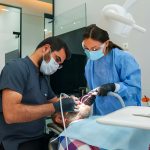
The term impacted tooth refers to teeth that have reached the time of eruption but are unable to take their normal position in the jawbone. This is seen most commonly in the upper and lower wisdom teeth and the impacted canine tooth.
What are the Symptoms of Impacted Teeth?
Impacted teeth are teeth that are trapped under the gum or have not fully erupted. The impacted wisdom teeth symptoms are as follows:
- Puffiness in the area where the impacted tooth is found.
- Pain in and around the tooth.
- Diffuse pain in the jaw and ear.
- Redness of the gums.
There may also be tenderness and discomfort in the area where the impacted tooth is located. These symptoms indicate the presence of an impacted wisdom tooth. This situation should be evaluated by a dentist.
How is Impacted Tooth Extraction Performed?
Impacted wisdom tooth removal is necessary for individuals with an unsuitable jaw structure. Wisdom tooth removal is perceived as a frightening operation. However, this consists of a course of treatment that varies according to the person’s situation. The appropriate treatment is determined by taking into account the degree to which the tooth is impacted and its position in the mouth.
If most of the tooth has come out and only part of it remains impacted, it can be extracted non-surgically under the guidance of a specialist. However, if the tooth is stuck in the jawbone, completely impacted, or at an inappropriate angle, it must be surgically removed by a specialist dentist. Before the operation, the dentist evaluates the condition of the tooth with the necessary blood tests and X-rays. Antibiotic treatment can be started if necessary. Then preparation is made for the surgical intervention.
During surgery, local anesthesia is applied to the root of the tooth. Then, an impacted wisdom tooth removal procedure is performed. Pre-anesthesia spray-type medications are used to relax the patient. During the operation, the skin in which the tooth is embedded is cut, the tooth is removed and the opened area is closed with sutures, and the procedure is completed. Patients do not feel pain during this process and can easily return home after the operation.
Is Impacted Tooth Surgery Difficult?
This surgery can be scary for some people. But it can be safely done by an expert dentist. Preoperatively, regional or general anesthesia is performed to avoid the patient having any pain or uncomfortable sensations. Anesthesia ensures that the patient is more comfortable and the surgery goes seamlessly.
During the surgery, dentists do not encounter any difficulties while working to remove the impacted tooth with appropriate techniques. During this procedure, which takes an average of one hour, the patient does not feel any pain or discomfort because he/she is asleep. After the surgery, the patient is prescribed the necessary medications for possible pain and discomfort, and the healing process is monitored.

What Should Be Considered After Impacted Tooth Extraction?
To support the healing process after impacted tooth extraction, certain points should be considered after surgery. Fluid intake must be discontinued for the first 24 hours after the operation.The inside of the mouth should not be disturbed as much as possible. During this time, mouthwash and mouth rinsing must be refrained from. Hygiene of the mouth is also very crucial. However, brushing the areas close to the surgical site requires care. Contact of the toothbrush with the surgical area should be avoided. Teeth should be brushed with gentle movements as recommended by the dentist.
Gargling should also be determined according to the dentist’s recommendations. Eating habits are also of great importance during this period.In the first days, it is recommended to eat bland and watery meals. Soup, puree or fruit juices can be preferred. Hot foods increase discomfort. Smoking and drinking alcohol can impair healing and lead to complications. Prevention of pain and inflammation is also one of the most important things.It is essential to use the painkillers prescribed by the dentist for impacted wisdom tooth pain. Cold compresses relieve swelling and pain.
What Happens if the Impacted Tooth is not Extracted?
If impacted wisdom teeth are not extracted, negative consequences such as decay of second molars, destruction of tooth roots, and abscess development may occur. In neglected cases, cyst formation in the jawbone can be observed.
This condition leads to the loss of other teeth and bone resorption in the maxilla. These situations cause serious problems in terms of dental health, and the treatment process may become more challenging if not intervened in time. For this reason, extracting impacted teeth when necessary is a very important step to protect health.
Should Every Impacted Tooth Be Extracted?
Impacted tooth can remain in the mouth for many years without causing any problems. It is nevertheless vital to keep in mind that impacted teeth can cause some potential issues. Thanks to dental examinations, such problems can be detected and treated before they become apparent. Some of the potential problems of impacted teeth include:
- They can cause decay or loss of neighboring teeth.
- Tumors such as cysts or ameloblastoma can develop around them.
- They can make it difficult to use dentures.
- They can result in the deterioration of teeth after dental cosmetic and smile design procedures.
For these reasons, these teeth may have to be removed. When predictable problems are detected as a result of X-ray analysis, intervention should not be postponed. Unless these teeth are extracted, they will put pressure on the other teeth and cause them to grow crooked. If these teeth are found to be uncomfortable for the patient and may affect the success of the treatment, they should be extracted. However, it cannot be said that a completely healthy wisdom tooth should be extracted. If it does not cause any discomfort or if no other treatment is planned for the tooth, there is no harm in keeping the impacted tooth in the mouth.
Conclusion
An impacted tooth is a tooth that cannot take its normal position in the jawbone even though it is due to erupt. A tooth that cannot erupt properly on time puts pressure on others and causes pain. Among the biggest symptoms are severe pain and swelling. Impacted teeth need to be extracted when necessary.
Extraction of impacted teeth requires great expertise.In our dental clinic, we provide services to our dentists who are specialized in their respective fields. We create special and privileged treatment plans for each patient and follow the process from beginning to end. You can keep in touch with us for more information and prices about the extraction of impacted tooth.